
Garfield County Criminal Court Records
A Garfield County criminal court record is the court-maintained case file, not just a police report, jail roster entry, or background check. It begins when a criminal complaint, information, ticket, or related charging document is filed with the court. The file may then collect advisement entries, bond rulings, arraignment notes, motions, orders, plea documents, trial events, disposition and sentence orders, restitution, fines, probation terms, and protection orders.
Felonies belong in District Court after filing or bind-over. County Court handles misdemeanors, traffic offenses, felony complaints and preliminary stages, protection orders, and some lower-level matters. Municipal courts in Garfield County towns handle local ordinance and municipal misdemeanor cases. The 9th Judicial District Attorney prosecutes state criminal charges for Garfield, Pitkin, and Rio Blanco counties, while the Colorado State Public Defender's Glenwood Springs office represents qualifying defendants in Garfield County criminal cases.
Search Garfield County Criminal Records
Criminal court record access uses the same Colorado channels as other Garfield County court records, with criminal-specific document choices on the record request form. Use the Colorado docket search for hearing dates. Use the Colorado record and document request form for the complaint or information, disposition or sentence order, protection order, ticket, Register of Actions, or certification. Use the access guide's paid vendor path for a register search when needed, but official documents still come from the court.
- Confirm the case is a Garfield County state case, municipal case, or statewide criminal-history question.
- Search the docket with the 9th Judicial District, Garfield County, a date, and a second filter.
- Use the court record request form for criminal case documents and select Garfield County as the location.
- Enter the case number if known, or provide the defendant name, filing year, date of birth if known, and other locating details.
- Request the complaint or information to see filed charges, then request the disposition or sentence order for outcome and sentence details.
- For a statewide criminal-history check, use the CBI system instead of treating it as a court case-file search.
The CBI Internet Criminal History Check is assigned to this page in the manifest and is a separate statewide name-based criminal-history route.
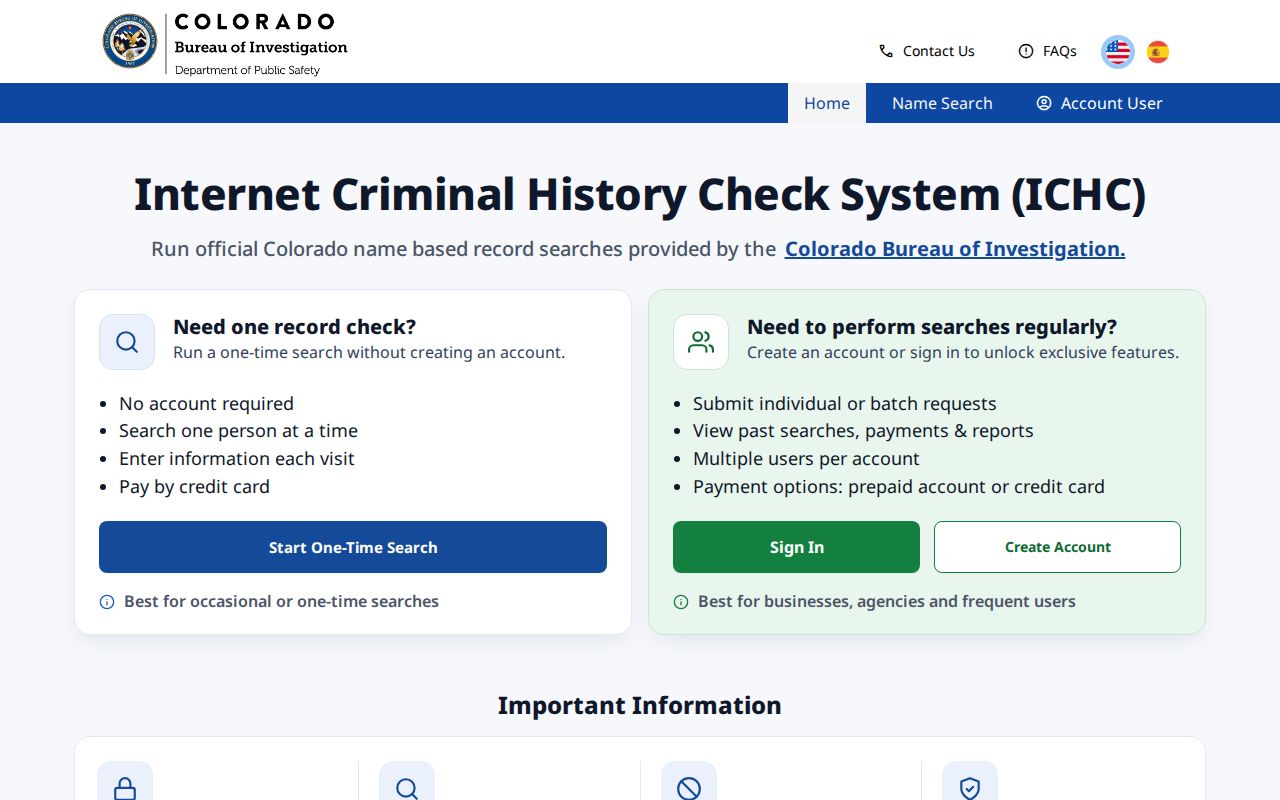
The CBI check can help with statewide criminal-history research, but it does not replace a Garfield County criminal court case file from the court.
Garfield County Criminal Case Flow
Criminal court records become easier to read when the case path is clear. A person may be arrested and booked before the court file is complete. The charging document starts the formal court charge record. The case then moves through advisement, arraignment, pretrial hearings, motions, plea negotiations, trial if needed, disposition, and sentencing. Each stage can add a new entry or document to the Garfield County criminal court record.
Case flow: Charges Filed › Arraignment › Pretrial / Motions › Plea or Trial › Disposition › Sentencing
| Stage | What Happens |
|---|---|
| Charges Filed | The complaint, information, ticket, or related filing identifies alleged offenses and starts the court track. |
| Arraignment | The defendant is advised of charges and a plea may be entered. |
| Pretrial / Motions | Attorneys file requests, exchange discovery, address bond, and prepare plea or trial issues. |
| Plea or Trial | The case resolves by plea, trial verdict, dismissal, deferred outcome, or other court order. |
| Disposition | The court records the outcome of each charge or the case as a whole. |
| Sentencing | The court imposes jail, prison, probation, fines, restitution, treatment, or other terms if there is a conviction or plea. |
What Garfield Criminal Records Show
Garfield County criminal court records are field-heavy. The exact file depends on the case, but the research identifies common criminal fields and request-form categories. A criminal record may show the case number, defendant, filed charges, statute or description, classification, bond, plea, disposition, sentence, probation, protection order, restitution, fines, and court events. The full court file adds context that a jail roster or sheriff activity report does not show.
| Field | What It Shows |
|---|---|
| Case Number | The court's criminal case identifier, useful for docket and document requests. |
| Defendant | The accused person named in the Garfield County criminal case. |
| Charges | Alleged offenses, statute descriptions, severity, and later amendments or dismissals. |
| Bond | Release amount, status, or conditions when reflected in the court file. |
| Plea | The defendant's answer to a charge, such as guilty or not guilty. |
| Disposition | The outcome, including guilty, dismissed, deferred, acquitted, or sentenced entries. |
| Sentence | Jail, prison, probation, fines, restitution, treatment, or protection-order terms. |
| Restrictions | Sealed, suppressed, juvenile, or redacted information that may not be public. |
Custody status is separate from the court file. If a person is in county jail, use the Garfield County jail roster, and if a sentence sends the person to state prison, the Colorado DOC offender search is the prison locator.
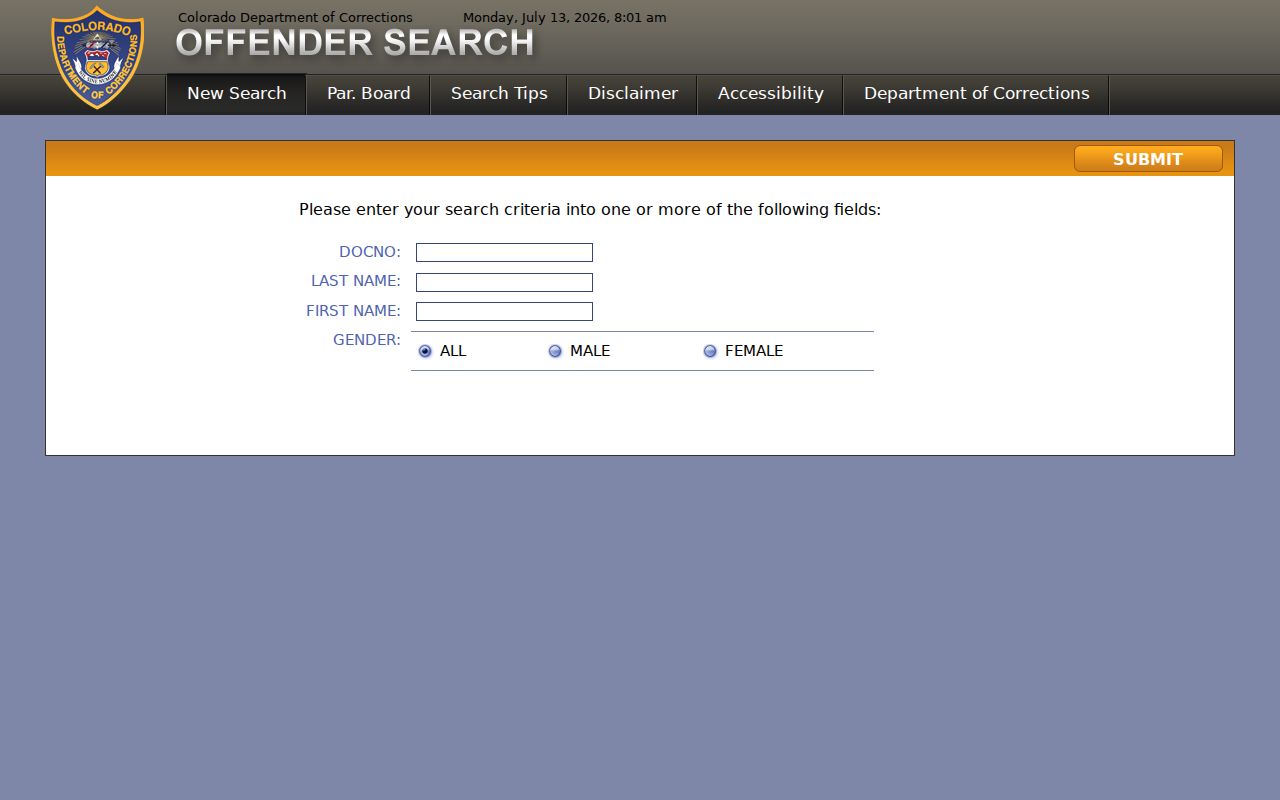
The DOC search applies after state prison custody, while Garfield County criminal court records explain the court outcome that may have led there.
Charges vs Convictions
A Garfield County criminal court record can show charges that never become convictions. A charge is an allegation filed in court. A conviction is an outcome after a guilty plea, guilty verdict, or other qualifying finding. Some charges are amended, reduced, dismissed, or resolved through a deferred process. That is why the disposition and sentence order matter as much as the original complaint or information.
| Point | Charge | Conviction |
|---|---|---|
| Meaning | Alleged offense filed in court. | Final or qualifying finding of guilt or plea outcome. |
| Timing | Appears near the start of the case. | Appears after plea, trial, or court resolution. |
| Record value | Shows what was accused. | Shows what was proved, admitted, or finally resolved. |
| Risk of misread | Can be dropped or changed. | Must still be read with sentence, appeal, sealing, and deferred-status context. |
Sealed and Expunged Records
Colorado treats sealed and expunged criminal records differently. Sealing limits public access while the record still exists for courts, law enforcement, prosecutors, and certain authorized agencies. Expungement is stronger and is often tied to juvenile matters. The research points Garfield County users to the Colorado Judicial "Seal My Case" page and the CBI court-order sealing information when arrest and criminal justice records are involved.
| Point | Sealed | Expunged |
|---|---|---|
| Public view | Hidden from ordinary public search. | Removed or treated with stronger statutory restriction. |
| Record still exists | Yes, for authorized users. | Often treated as removed for public purposes, with juvenile-specific rules. |
| Common route | Petition, motion, or automatic sealing category. | Usually juvenile or specific statutory process. |
| Garfield County step | File in the District, County, or municipal court where the record exists unless automatic sealing applies. | Use the juvenile or applicable court process if eligible. |
The manifest assigns the Colorado Seal My Case self-help page and the Colorado sealed case search page to Garfield County criminal court records.
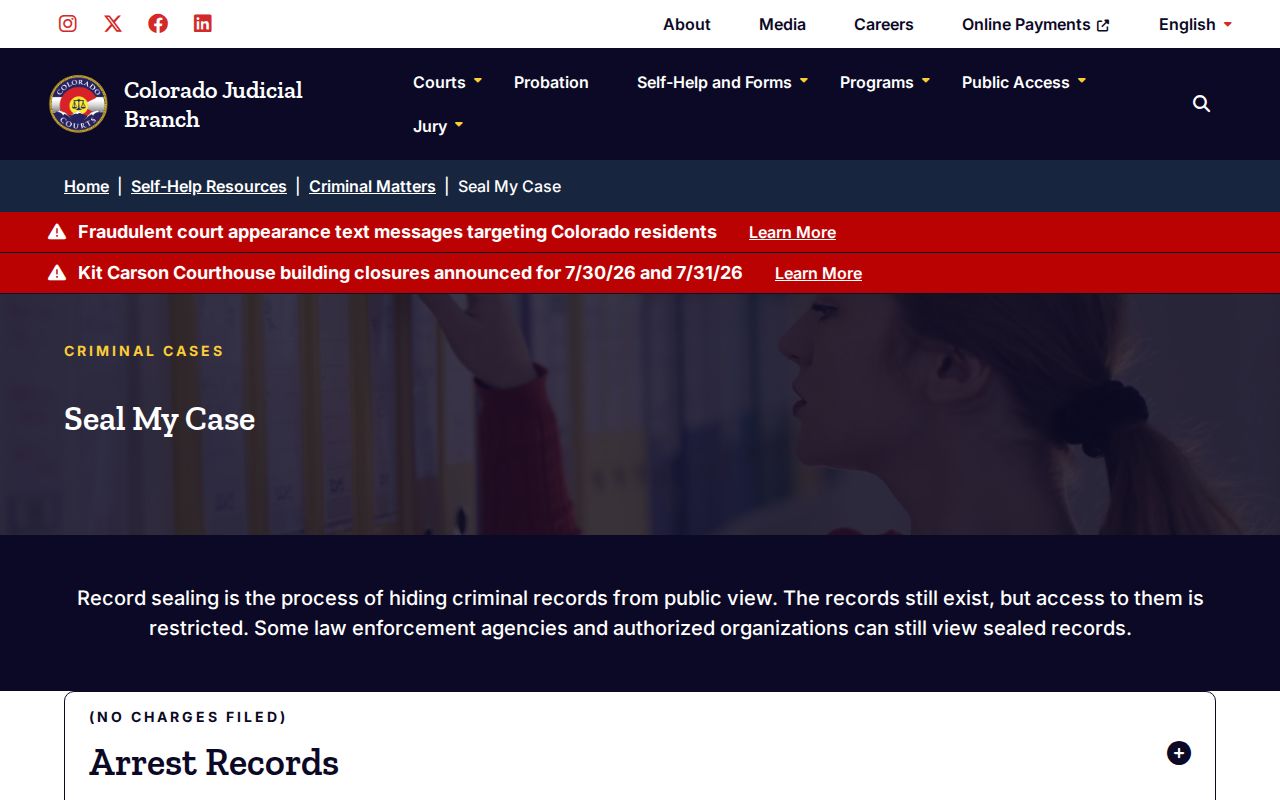
The self-help page is the starting point for identifying the correct sealing category before filing anything in a Garfield County court.
The Colorado sealed case search confirms certain automatic sealing under Colorado law.
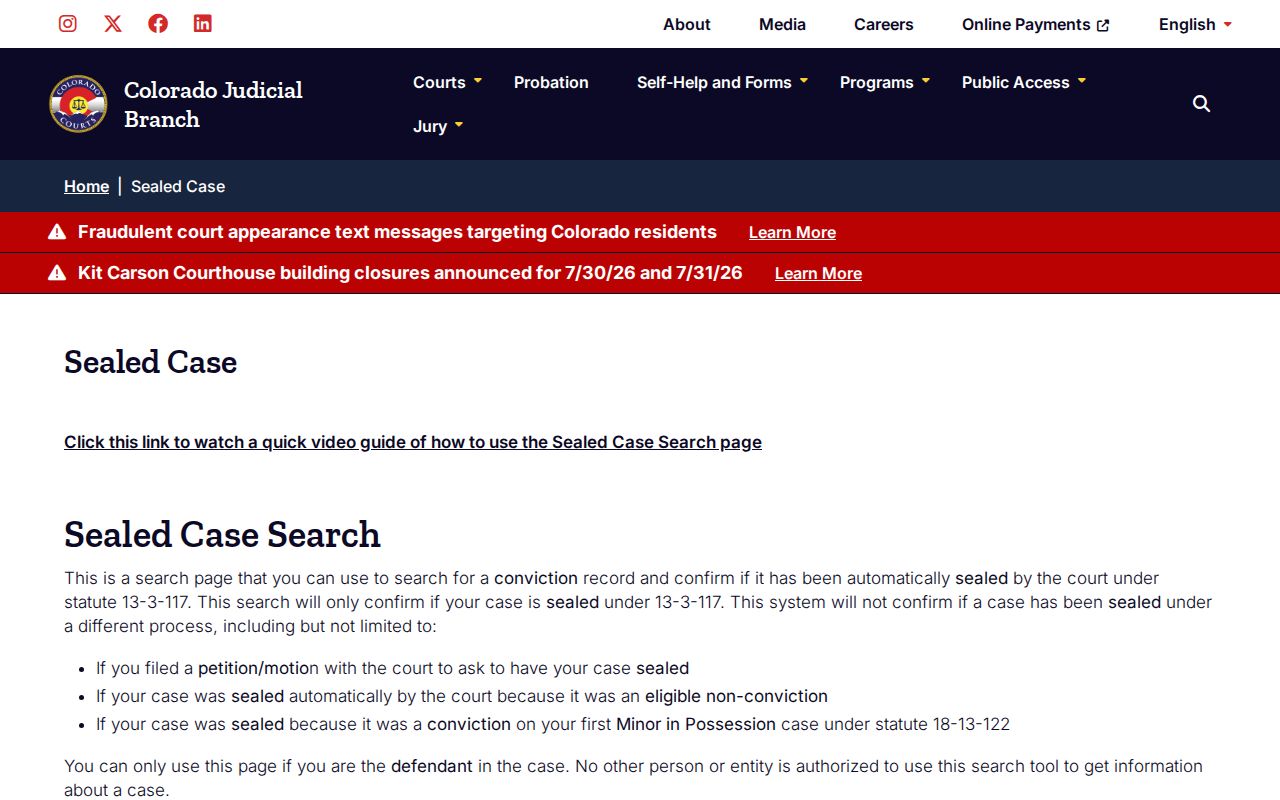
That search is narrow. It should not be treated as a complete criminal court record search for Garfield County.
Access to Garfield Criminal Records
Public access to Garfield County criminal court records is shaped by Colorado court access rules and criminal justice statutes. CJD 05-01 governs public access to court records, while C.R.S. 24-72-703 is tied to sealing criminal justice records. Juvenile access and expungement are controlled by separate Title 19 rules. Court records are not the same as county administrative records under CORA, and sheriff reports are not the same as criminal case files.
The Sheriff's Records Division may hold incident reports, traffic tickets, booking photo records, statistical data, and NIBRS material. Some reports cannot be released through the sheriff and may require discovery through the District Attorney or disposition and conviction documents from the courts. For criminal court records, the safest route is the court record request form or direct contact with the Garfield County court clerk.
Note: Juvenile, sealed, suppressed, and protected-information records may require photo ID, court review, or a court order before release.
Garfield Criminal Court Offices
Three local offices often appear in Garfield County criminal court records. The Clerk of Court holds court case documents at the Garfield County Courthouse / Combined Courts. The 9th Judicial District Attorney files and prosecutes criminal charges for Garfield County. The Colorado State Public Defender's Glenwood Springs office serves qualifying defendants in Garfield and nearby counties. These offices have different roles, so record requests should go to the office that actually holds the record.
| Office | Contact | Record Role |
|---|---|---|
| Garfield County Courthouse / Combined Courts | 109 8th St., Suite 104, Glenwood Springs; 970-928-3065 | Criminal case files, dockets, dispositions, sentence orders, and court documents. |
| 9th Judicial District Attorney | 109 8th St., Suite 308, Glenwood Springs; 970-945-8635 | Prosecution, charging decisions, plea discussions, discovery, and victim services. |
| Colorado State Public Defender - Glenwood Springs | 818 Colorado Ave., Suite 101, Glenwood Springs; 970-945-5828 | Court-appointed defense for eligible Garfield County criminal defendants. |
The CBI sealing page is also assigned to this page in the manifest.
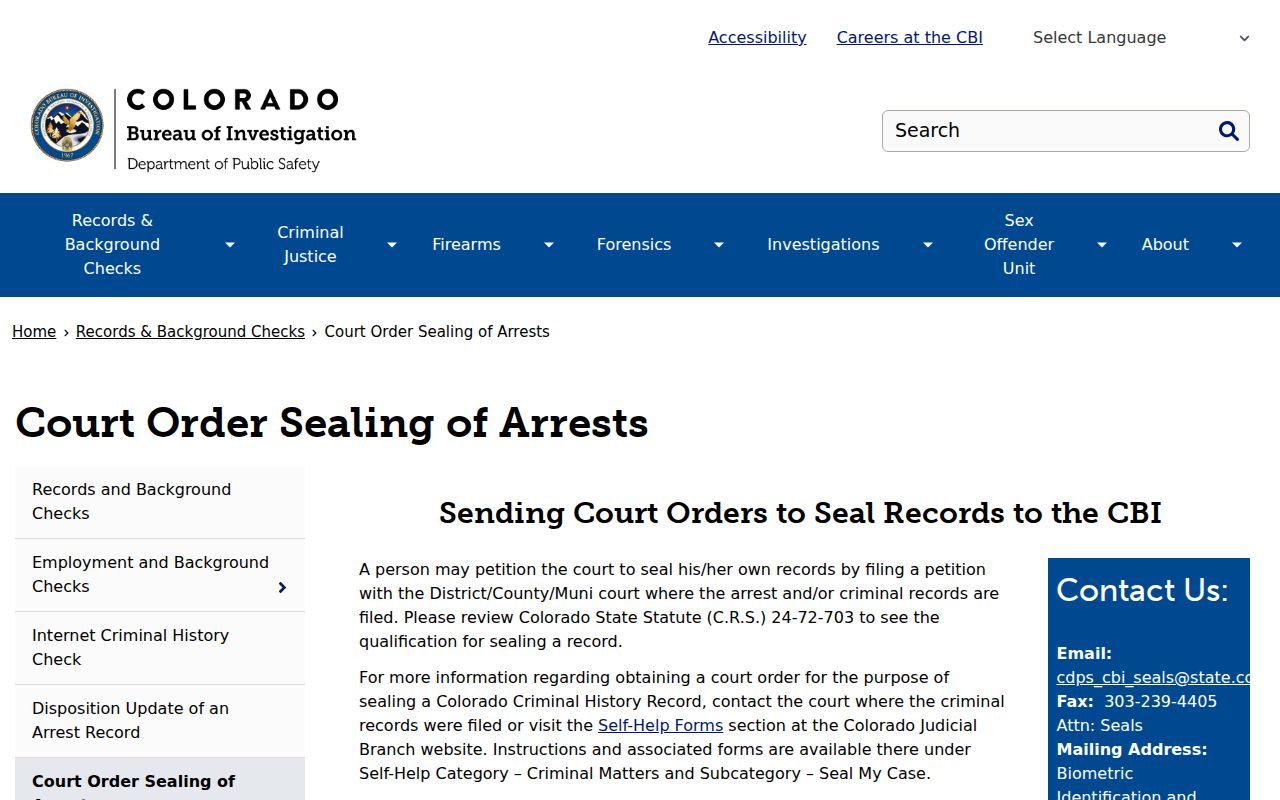
That CBI resource connects arrest-record sealing with the court where the arrest or criminal record was filed.