
Garfield County Arrest Records and Charges
Garfield County arrest records are tied to the arrest, booking, custody, incident, or sheriff report side of an event. The Garfield County Sheriff's Office may have case reports, booking-related records, traffic tickets handled by the office, correspondence, sex offender registry material, statistical data, and NIBRS data. The sheriff's current inmate material can show recent bookings and charge descriptions, but that is not the same as a final court charge record or a conviction.
Charges after arrest are the court-facing part. The 9th Judicial District Attorney files and prosecutes criminal charges for Garfield County, Pitkin County, and Rio Blanco County. Once a complaint, information, ticket, or other charging document is filed with the court, the charge becomes part of the court case. The full case file, hearings, plea, disposition, and sentence belong on the criminal court record, while this page stays focused on the arrest-to-charges path and charge status.
The manifest assigns the Garfield County Sheriff's personnel page to this arrest records and charges page.
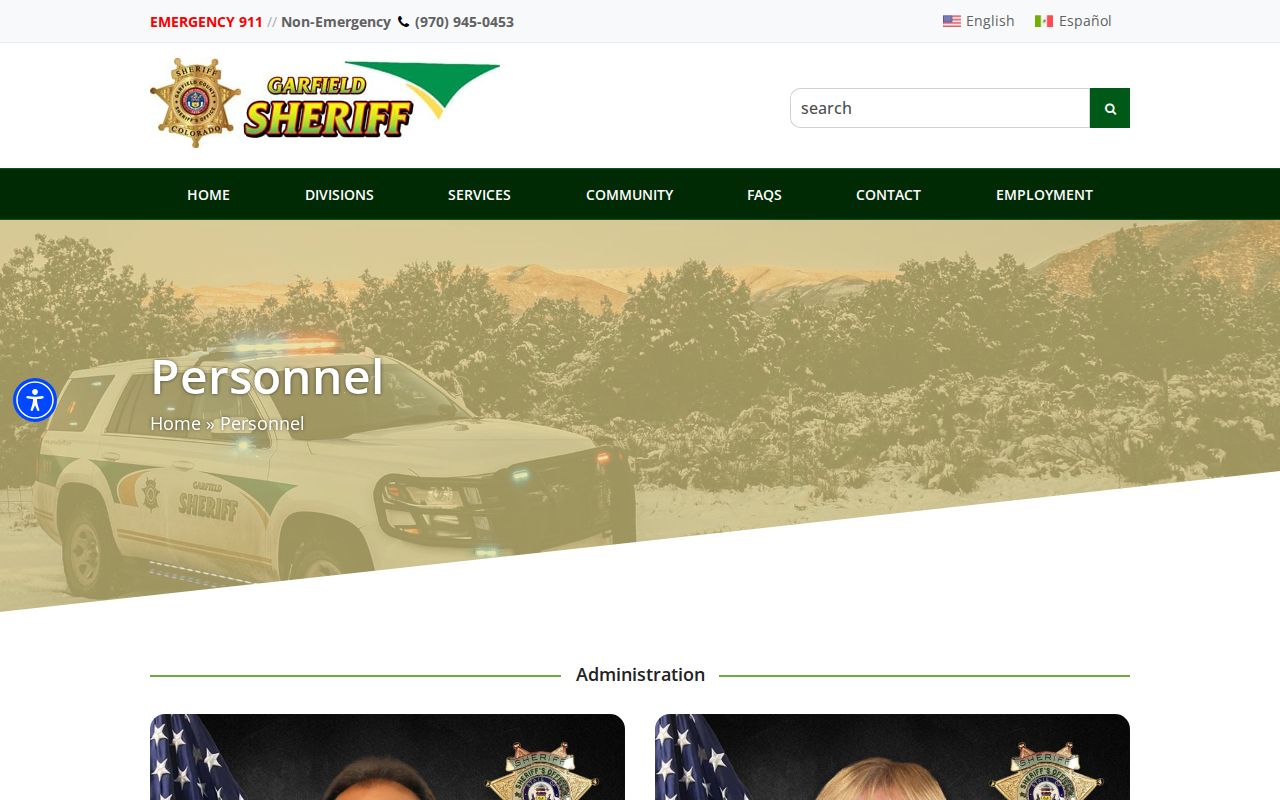
The personnel page identifies Sheriff Lou Vallario and local command staff, which helps place arrest records with the correct sheriff's office.
Find Garfield County Arrest Records
There is no single Garfield County arrest records and court charge database that provides every booking record, report, filed charge, and final outcome. The sheriff's current inmate roster can show custody and charge descriptions for people in custody or recently booked. The Sheriff's Records Division handles report requests. The Colorado docket search and record request form handle filed court charges and case documents. The CBI criminal-history check is a statewide name-based tool, not a local court case file.
- Check the Garfield County current inmate source when the question is custody, booking, bond status, or recent release.
- Use the Sheriff's Records Division for incident reports, traffic tickets, booking photo requests, and related sheriff-held records.
- Use the Colorado docket search for court dates after charges are filed.
- Use the Colorado record and document request form to request the complaint, information, ticket, disposition or sentence order, protection order, or Register of Actions.
- Contact the municipal court if the charge is a city ordinance, municipal traffic, park, or local misdemeanor matter.
- Use the CBI Internet Criminal History Check only for statewide criminal-history research.
The manifest assigns the Garfield County Sheriff's contact page to the arrest-to-charges workflow.
Sheriff contact details matter because arrest status, booking questions, and patrol or dispatch questions do not all go to the court clerk.
Charges After Arrest Documents
Charges after arrest are usually documented through a complaint, information, indictment, or ticket depending on the case type and court. The research identifies complaint or information documents as criminal request options on the Colorado court record form. In Garfield County, felony matters can begin in County Court and move to District Court, while misdemeanors may stay in County Court or municipal court if the case is local ordinance based.
| Document | Who Files It | How It Works in Garfield County |
|---|---|---|
| Complaint | Law enforcement or prosecutor route | Often starts a criminal case or felony complaint track and lists alleged offenses. |
| Information | Prosecutor | Formal charging document used by the District Attorney to state court charges. |
| Indictment | Grand jury | Less routine, used when grand jury process is involved in serious matters. |
| Ticket | Officer or issuing agency | Can start traffic or lower-level offense cases, with routing controlled by the citation. |
The 9th Judicial District Attorney contact page is assigned to this page in the manifest.
The DA contact page is relevant because formal charges and prosecution decisions flow through the 9th Judicial District Attorney.
Garfield County Charge Status
A charge can change after it is filed. Court charge records may show a pending charge, a reduced charge, an amended count, a dismissed count, a deferred outcome, or a final sentence. A single arrest can create several charges, and those charges may resolve in different ways. The jail roster may show a charge description at booking, but the court record is the place to confirm filed charges, disposition, and sentence.
| Status | What It Means |
|---|---|
| Pending | The charge is filed and the case has not reached final disposition. |
| Amended | The charge wording, count, statute, or level changed by court filing or order. |
| Reduced | The charge level or offense was lowered, often through plea or prosecution decision. |
| Dismissed | The charge was ended by court order or prosecution action and is not a conviction. |
| Deferred | The case has a court-managed outcome that may depend on meeting conditions. |
| Sentenced | The court imposed penalties after plea, conviction, or qualifying disposition. |
Note: Always read each charge separately because one Garfield County arrest can produce mixed outcomes across several counts.
Charges vs Convictions
Garfield County arrest records and charge records can be misread if every filed charge is treated as a conviction. A charge is an allegation. A conviction is a final outcome after a guilty plea, guilty verdict, or other qualifying result. The disposition and sentence order are the key documents for outcome. For the full court file and sentencing record, use the Garfield County criminal court records page.
| Point | Charge | Conviction |
|---|---|---|
| Meaning | Accusation filed after arrest or citation. | Final or qualifying outcome showing guilt or plea result. |
| Where found | Complaint, information, ticket, docket, Register of Actions, and sometimes jail roster. | Disposition, sentence order, court docket, and criminal-history record if reportable. |
| Can change | Yes, charges can be amended, reduced, or dismissed. | Can be appealed, sealed, or affected by deferred terms, but it is the outcome record. |
| Best request | Complaint/information or Register of Actions. | Disposition or sentence order. |
Sheriff Arrest Records Requests
The Garfield County Sheriff's Records Division is the channel for sheriff-held records. The research states that it maintains case report files, traffic tickets, statistical data, correspondence, sex offender registry material, and NIBRS data. To request reports, submit a signed request form with a photocopy of a license or ID. Payment must be received before release. Some reports cannot be released, and the applicant may be referred to the District Attorney for discovery or to the courts for disposition and conviction records.
| Sheriff Record | Captured Fee or Rule |
|---|---|
| Report copy | $0.25 per page. |
| CD, tape, audio, or video | $5 each when applicable. |
| Clearance or local background letter | $5 per name. |
| Extensive research | $100 deposit applied toward research and copy fees, with balance refunded. |
| Release limits | Some case reports may require DA discovery or court disposition records instead. |
The Garfield County Sheriff's Records Division page is assigned to this page in the manifest.
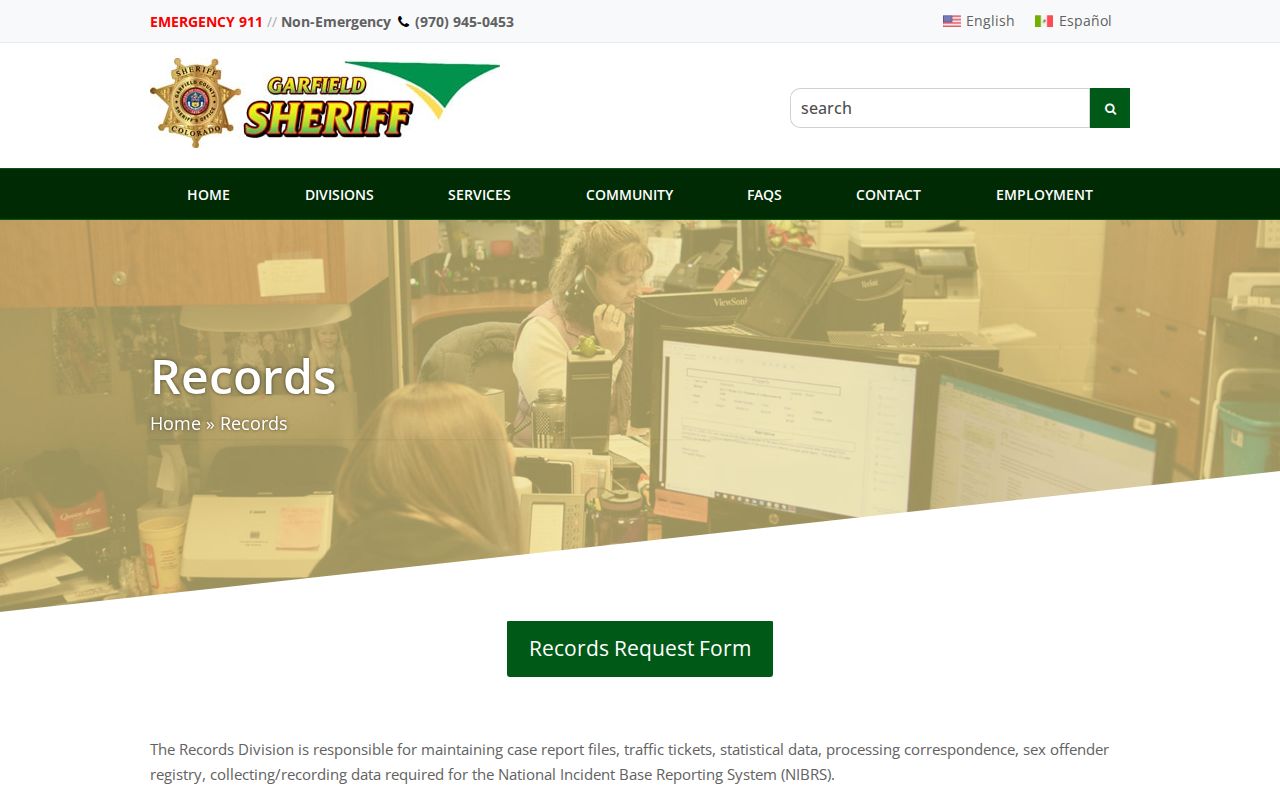
The records division page is the correct sheriff channel for arrest-related reports, but it is not the court clerk for filed charges.
Arrest Records and Activity Reports
Garfield County Sheriff's activity reports can mention arrests and criminal reports by date range, while the current inmate roster can show booking data and charge descriptions. These are useful for early arrest context. They do not prove final charges, conviction, or sentence. The research notes roster examples such as failure to appear, violation of a restraining order, DUI-related wording, second degree burglary, writ of habeas corpus, and fugitive-justice out-of-state warrant wording.
Roster fields can include name and age, gender, booking date, days in custody, booking number, bond amount or open status, release date, and charge descriptions. The captured PDF did not show mugshots, height, weight, eye or hair color, race, date of birth, arresting agency, judge, magistrate, pod, or court date. For court charges after arrest, the complaint or information remains the better document.
The Garfield County Sheriff's activity reports page is assigned to this page in the manifest.
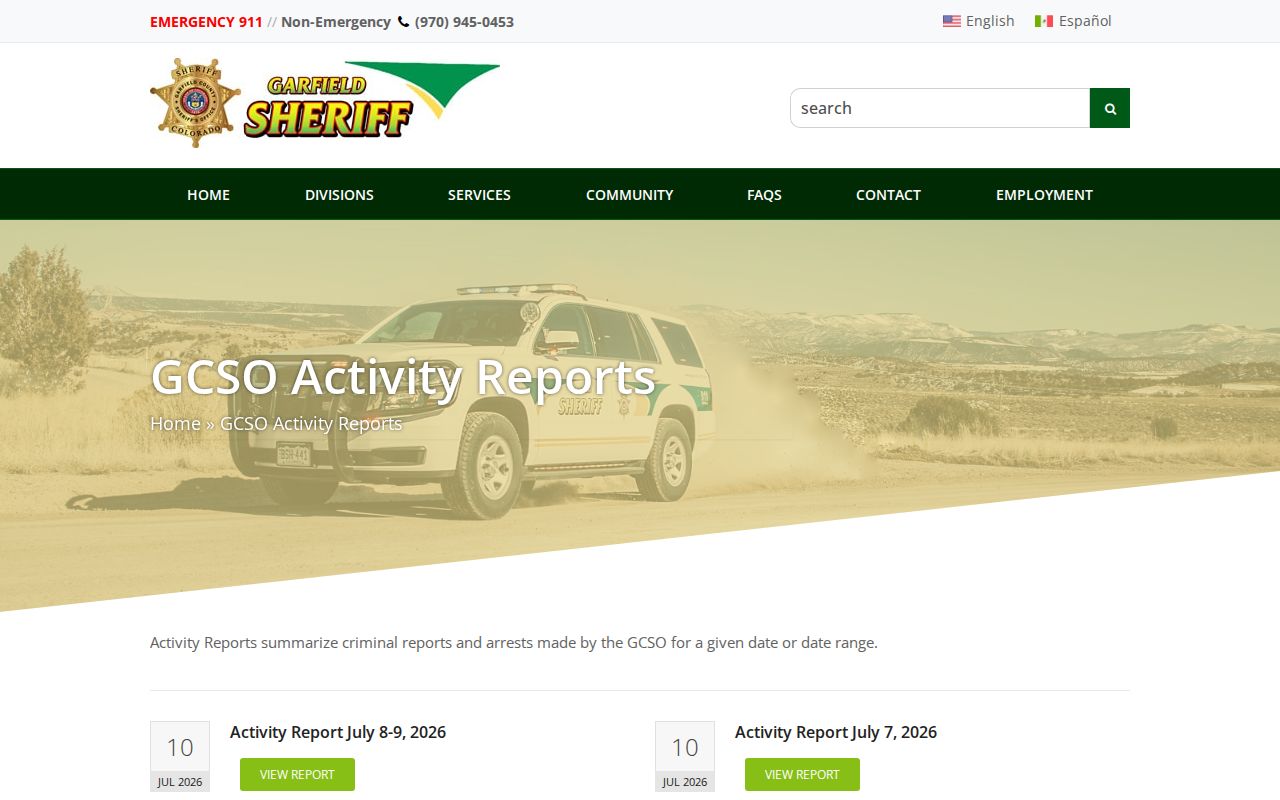
Activity reports help locate public safety events, but the court record must be checked before drawing conclusions about filed charges or outcomes.
DA Role in Court Charges
The 9th Judicial District Attorney is central to court charges after arrest. The office serves Garfield, Pitkin, and Rio Blanco counties. The research identifies Benjamin Sollars as District Attorney and lists the main DA office at 109 8th Street, Suite 308, Glenwood Springs, CO 81601, with phone 970-945-8635 and fax 970-945-1304. The DA's role can include charging decisions, prosecution, plea discussions, discovery, diversion or deferred-case discussions, victim services, and sentencing recommendations.
That role does not make the DA the public court-records clerk. To obtain filed complaints, informations, Register of Actions, dispositions, and sentence orders, use the court record request route. To obtain sheriff reports, use Sheriff's Records. To address discovery in an active criminal case, the sheriff's own records guidance warns that some records may require a DA motion or court process.
The manifest assigns the 9th Judicial District Attorney bio page to Garfield County arrest records and court charges.
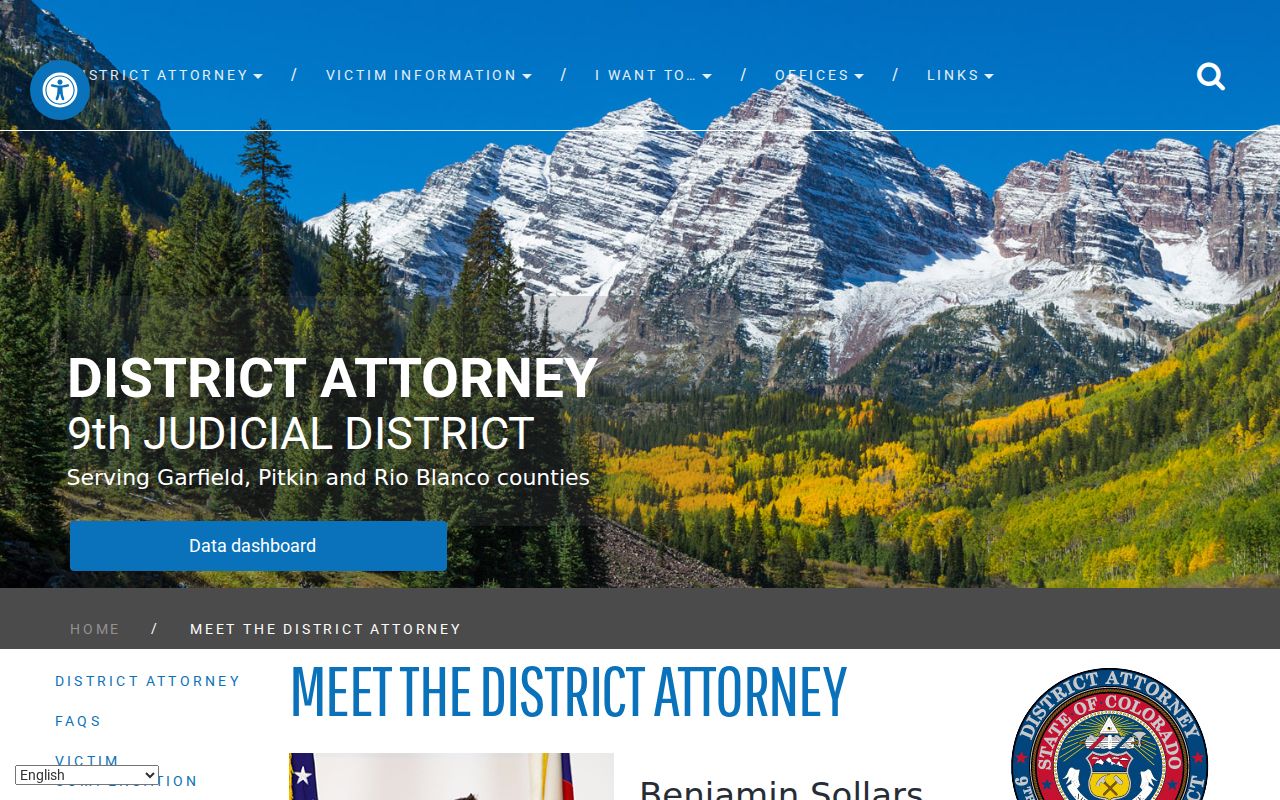
The DA bio source helps identify the local prosecutor connected to filed Garfield County court charges.
Restricted Garfield Charge Records
Arrest records and charge records may be restricted, sealed, redacted, or unavailable to the public. Juvenile matters are restricted under Colorado law and court policy. Sealed records are hidden from public view but may still be accessible to courts, law enforcement, prosecutors, and certain agencies. Some arrest or non-conviction records may be sealed automatically, while others require a motion or petition in the court where the record was filed. CBI sealing guidance points to C.R.S. 24-72-703.
| Point | Sealed | Expunged |
|---|---|---|
| Public view | Hidden from ordinary public searchers. | Stronger removal or statutory restriction, often juvenile-focused. |
| Agency access | Courts, prosecutors, law enforcement, and authorized agencies may still see it. | More limited, depending on Colorado juvenile or specific statute. |
| Common path | Automatic sealing, motion, or petition in the filing court. | Juvenile expungement or a specific statutory process. |
| Best source | Colorado Judicial sealing resources and CBI sealing guidance. | Colorado juvenile expungement rules and court forms. |
Protected identifiers can also be redacted. Social Security numbers, financial account data, full birth dates, minor identifiers, protected addresses, sealed case details, and confidential medical or mental health information may not appear in a public copy.